
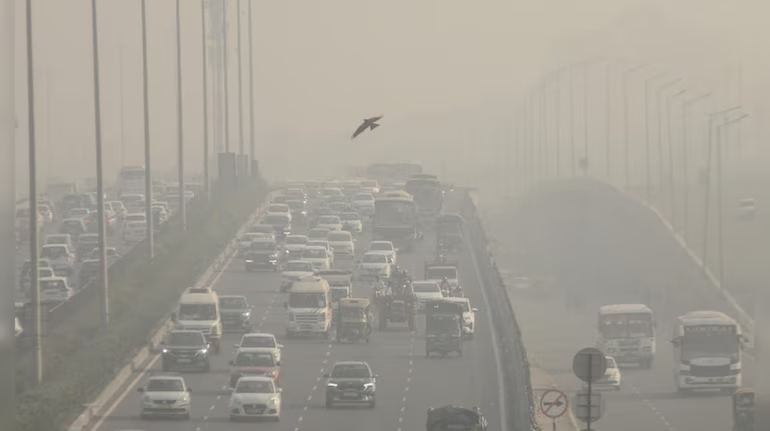
Delhi woke up to another grim morning as Delhi air quality deteriorated sharply, slipping back into the “very poor” category across most parts of the national capital. A thick blanket of smog once again covered the skyline, reducing visibility and raising serious health concerns for residents. According to official data, pollution levels surged overnight, highlighting how fragile air conditions remain despite multiple control measures already in place.
The sudden dip in air quality has reignited public concern, especially as winter pollution patterns begin to tighten their grip on the city. Authorities have urged citizens to remain cautious while enforcing emergency steps to prevent the situation from worsening further.
Falls Back Into ‘Very Poor’ Category
Monitoring stations across Delhi reported alarming figures as the air quality index Delhi climbed beyond safe limits. Several areas recorded AQI levels well above 300, officially placing Delhi air quality in the “very poor” bracket. Pollution experts say calm winds, low temperatures, and trapped emissions contributed to the sudden spike.
While there was marginal improvement in some pockets during the afternoon, overall conditions remained hazardous. Officials confirmed that pollution dispersion remains slow, allowing pollutants to linger over the city for longer durations.
Residents in sensitive groups including children, the elderly, and those with respiratory conditions were advised to limit outdoor exposure as air pollution in Delhi continued to pose health risks.
Government Activates Emergency Measures as Delhi Air Quality Worsens
In response to the sharp decline in Delhi air quality, the government activated stricter stages of pollution control under the Graded Response Action Plan (GRAP). Authorities announced a set of emergency measures aimed at cutting emissions from vehicles, construction sites, and industrial units.
Key steps include increased checks on polluting vehicles, restrictions on diesel generators, and tighter enforcement of dust-control norms at construction locations. Officials said these actions are critical to preventing Delhi pollution from slipping into the “severe” category.
The administration also reiterated that long-term solutions remain under discussion, but immediate controls are necessary to protect public health during peak pollution periods.
Work-From-Home Push as Air Pollution in Delhi Intensifies
One of the most impactful responses to the decline in Delhi air quality has been the push for reduced physical attendance at workplaces. Authorities directed government offices and private institutions to adopt work-from-home arrangements wherever feasible.
The move aims to reduce traffic congestion, a major contributor to Delhi air pollution, especially during peak commuting hours. Officials warned that non-compliance could attract penalties, emphasizing the seriousness of the current pollution episode.
Experts believe that reducing vehicular movement, even temporarily, can help stabilize air quality levels if combined with other emission-control measures.
Health Advisory Issued Amid Poor Air Quality
Health authorities issued advisories as Delhi air quality remained in the danger zone. Doctors warned that prolonged exposure to polluted air can lead to respiratory distress, eye irritation, headaches, and worsening of chronic conditions such as asthma and heart disease.
Hospitals across the city reported a rise in patients complaining of breathing difficulties, a trend commonly observed during periods of poor air quality. Medical professionals advised residents to use masks outdoors, keep windows closed during peak pollution hours, and avoid strenuous physical activity outside.
The advisory also stressed the importance of monitoring daily AQI updates, as Delhi air quality can fluctuate rapidly depending on weather conditions.
Delhi NCR Air Quality Also Under Pressure
The pollution crisis is not limited to the capital alone. Delhi NCR air quality has also shown worrying trends, with neighboring regions such as Noida and Ghaziabad reporting elevated AQI readings. Experts noted that pollution does not respect administrative boundaries, making regional coordination essential.
Authorities in NCR districts implemented similar restrictions to curb emissions, particularly from construction activity and traffic movement. Environmental analysts said coordinated action across the region is critical to improving air pollution in Delhi NCR as a whole.
Why Delhi Air Quality Deteriorates Every Winter
Environmental experts point to a mix of factors behind recurring drops in Delhi air quality during winter months. These include vehicular emissions, industrial pollution, construction dust, biomass burning in surrounding states, and unfavorable meteorological conditions.
Low wind speed and temperature inversion trap pollutants close to the ground, preventing their dispersion. As a result, pollution accumulates quickly, pushing AQI of Delhi into higher categories even without sudden emission spikes.
While authorities have introduced multiple long-term policies, experts argue that consistent enforcement and regional cooperation are essential for sustainable improvement.
Forecast Suggests Continued Pressure on Air Quality
Weather forecasts indicate that Delhi air quality may remain under pressure in the coming days. Limited wind movement and stable atmospheric conditions could prevent rapid improvement, according to meteorological agencies.
Officials said that pollution levels will be reviewed daily, and further restrictions could be imposed if AQI readings worsen. Citizens were urged to stay informed through official updates and cooperate with pollution-control measures.
Environmentalists caution that while short-term steps can provide relief, lasting improvement in Delhi air quality requires structural changes in transport, energy use, and urban planning.
Public Response and Rising Concern Over Delhi Pollution
Public frustration continues to grow as residents struggle with repeated pollution episodes. Social media platforms were flooded with complaints and calls for stronger action, with many demanding long-term accountability for Delhi pollution.
Parents expressed concern over children’s health, while outdoor workers said prolonged exposure to polluted air affects productivity and well-being. Civic groups reiterated the need for transparent data sharing and sustained implementation of clean-air policies.
As Delhi air quality remains volatile, the pressure is mounting on policymakers to move beyond temporary fixes and focus on durable solutions.
The Fried Take
Delhi’s recurring pollution crisis is no longer just a seasonal inconvenience it is a persistent public health challenge. While emergency measures help manage immediate risks, the real test lies in long-term action that ensures Delhi air quality improves not just for a few days, but for future generations.


